GETTING STARTED
From a rough idea to a planned first story.
This is a real run: ask-the-docs, a small open-source tool that indexes a codebase's docs for coding agents. Below is everything the operator typed and decided, and what Claude handed back, in one session.
- 4pipeline commands
- 10decision cards answered
- 1 + 8epic and stories filed
- 2reviewed plans posted
Prompts are lightly trimmed. Everything Claude filed is public on GitHub, so you can check it against the screenshots.
-
01
Workshop the idea into a PRD
YOUHelp me prepare a minimal Product Requirements Document (
docs/prd.md) for this project. The seed idea is a small local service that developers run, pointing at their codebase's document folder (e.g.docs/), that indexes the documents it finds in Elasticsearch … The intended audience is developers with coding agents. Help me workshop the idea; I'd like to start with a minimal viable product so I can test the concept.CLAUDEAsks four scoping questions on one card, each with a recommended answer.
SearchWhat kind of search should the MVP test?- Lexical (BM25) recommended
- Hybrid
- Semantic only
RuntimeWhich language and runtime for the service and CLI?- Python recommended
- TypeScript/Node
- Go
ES lifecycleWho manages the Elasticsearch container?- Tool ships compose recommended
- Tool runs container
- Bring your own ES
+ one more on how the doc catalogue shapes indexing
YOU three follow-ups, condensedGiven how heavy Elasticsearch is … we'll need to support indexing multiple codebases. I'd like the tool to be configured via a YAML file … and to query it for metadata, like “which documents are relevant to topic XYZ”.
Result
docs/prd.md, committed and merged tomain. -
02
Workshop the architecture
YOUNow let's workshop an architecture for the service, documented at
docs/architecture.md. How do you think it should work?CLAUDEProcessHow do reads stay fresh, and is there a daemon?- Direct + lazy sync recommended
- Direct + watcher only
- Local daemon + API
YOU typed instead of pickingDirect + lazy sync sounds interesting, but I'm concerned about indexing time. Some of the documents are large (over a megabyte). I'd want to keep the watch concept but make it optional. Thoughts?
CLAUDEComes back with a revised design: an optional watcher, a time-budgeted lazy sync, a manual
atd sync, and splitting oversized sections, plus the PRD edits to match. One card: Yes, as proposed.Result Architecture docs in a hub-and-spoke layout, and a doc catalogue so every later stage treats the PRD and architecture as binding.
-
03
Draft the epic
YOU/github-pipeline:drafter prepare an epic to deliver the initial implementation with the aim of being able to verify the concept in a real-world project, focus mostly on the "happy path"CLAUDEReads the binding docs, then asks before it commits to anything:
DeferHappy path first: which PRD requirements should this epic defer to the hardening pass?- atd prune + orphan flags
- Detailed config errors
- Live catalogue refresh
- Auto rebuild on change
PrivacyThe architecture puts eval question sets in this public repo, but they'd hold proprietary content. How should I fix that?- Update the architecture doc now recommended
- Note it in the epic only
+ creating the repo, accepting provisional answers to five open questions, and a final “file it?” check
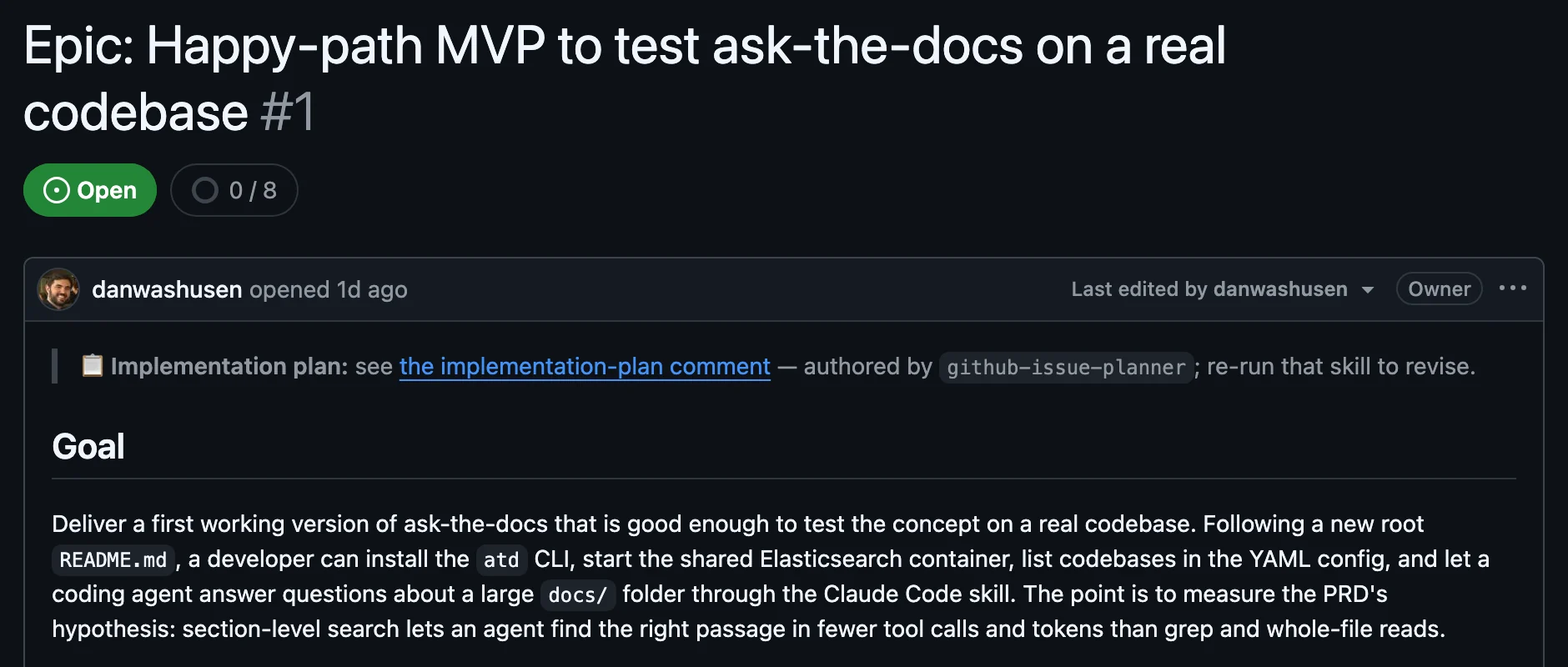
Epic #1, filed with a goal, background, definition of done and explicit out-of-scope list. HANDOFFNext: cut #1 into stories in a fresh session.
/github-pipeline:slicer 1 -
04
Slice it into stories
YOU/github-pipeline:slicer 1CLAUDEProposes eight independently shippable stories in build order, and writes nothing until you approve the whole cut.
Write gateFile these 8 stories under #1, in this order?- File all 8
- Change the cut
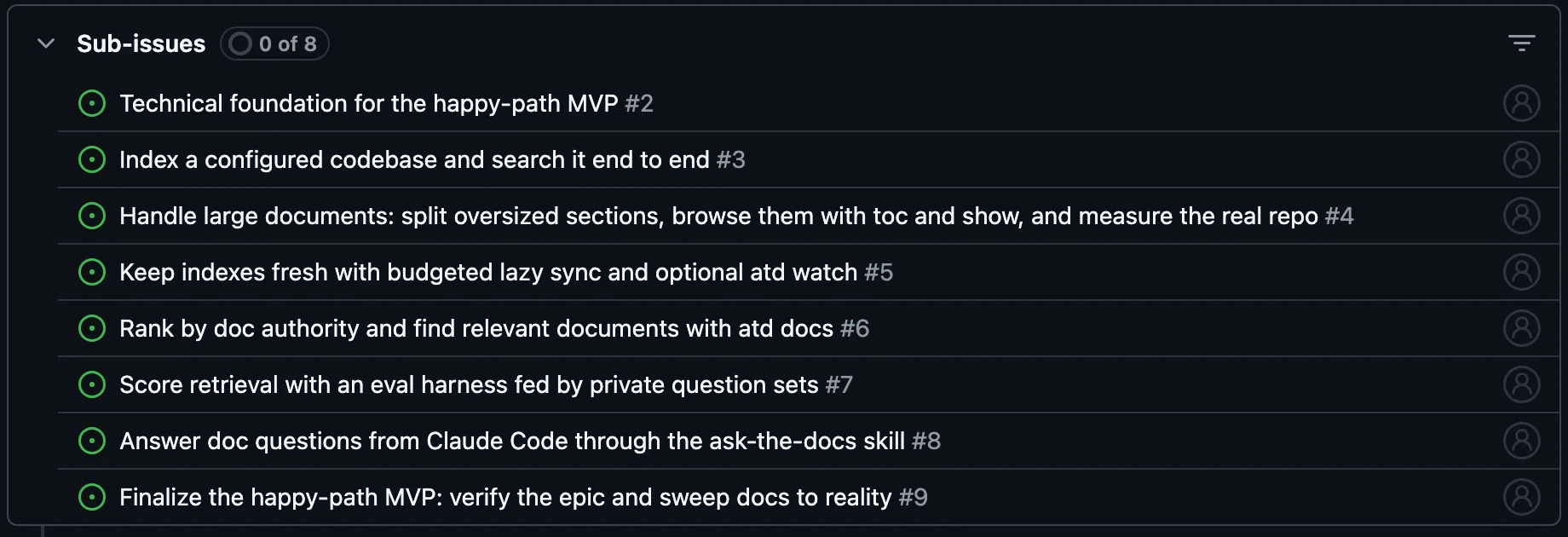
Filed as native GitHub sub-issues, so the epic's progress rolls up as stories close. -
05
Plan the epic
YOU/github-pipeline:planner 1CLAUDEPins only what crosses stories: who owns each module, the shared contracts and the sequencing. One call is yours:
DecisionWhat minimum Python version shouldatdrequire?- Python ≥ 3.12 recommended
- Python ≥ 3.14
Recommendations are only defaults: here the operator overrode one, and the plan records it as [user decision 2026-10-24].
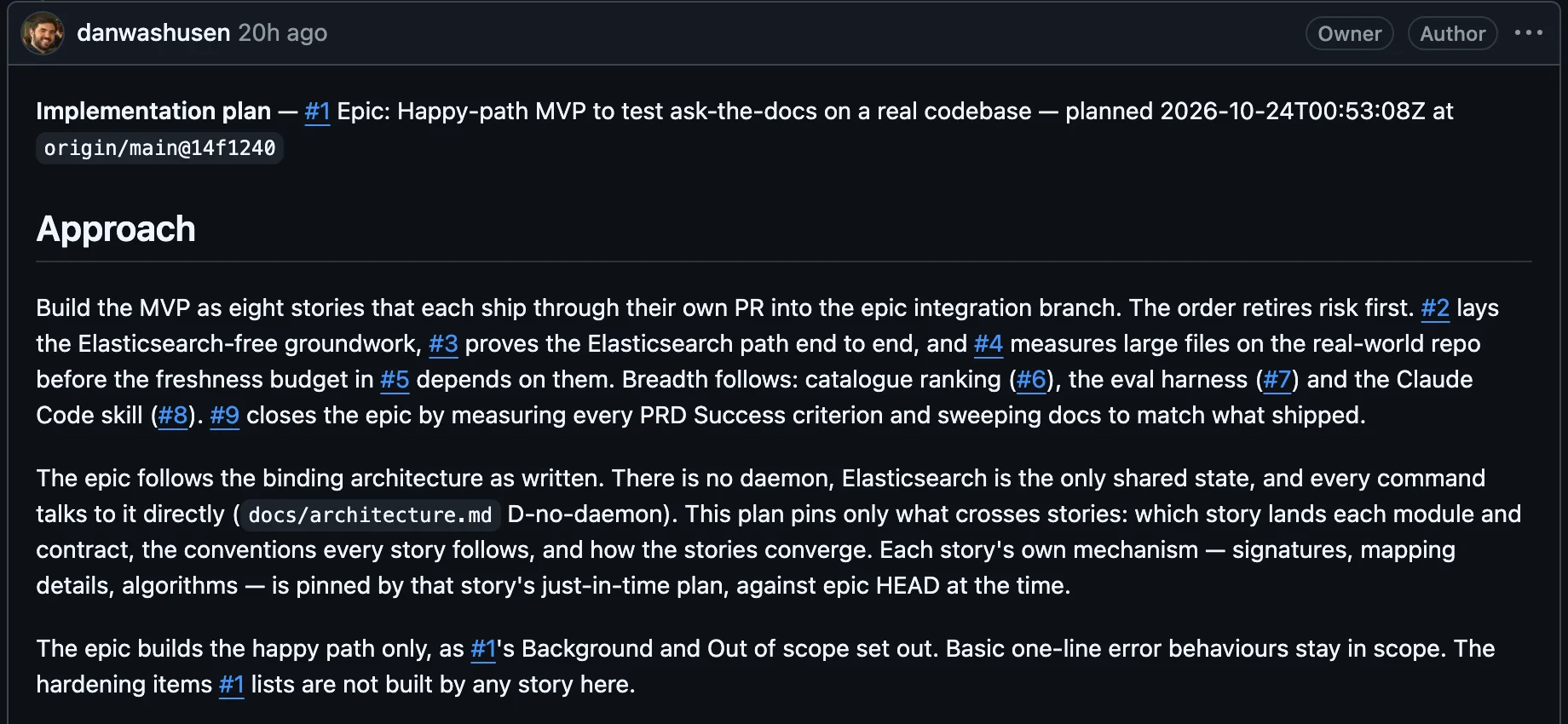
The epic plan, posted to #1 after two independent review passes. -
06
Plan the first story
YOU/github-pipeline:planner #2CLAUDESpots that the binding architecture and the story order disagree, and asks rather than guessing:
DeviationThe architecture points theatdcommand at a module that story #3 owns. Point it at a placeholder until #3 lands?- Approve recommended
- Reject: re-plan
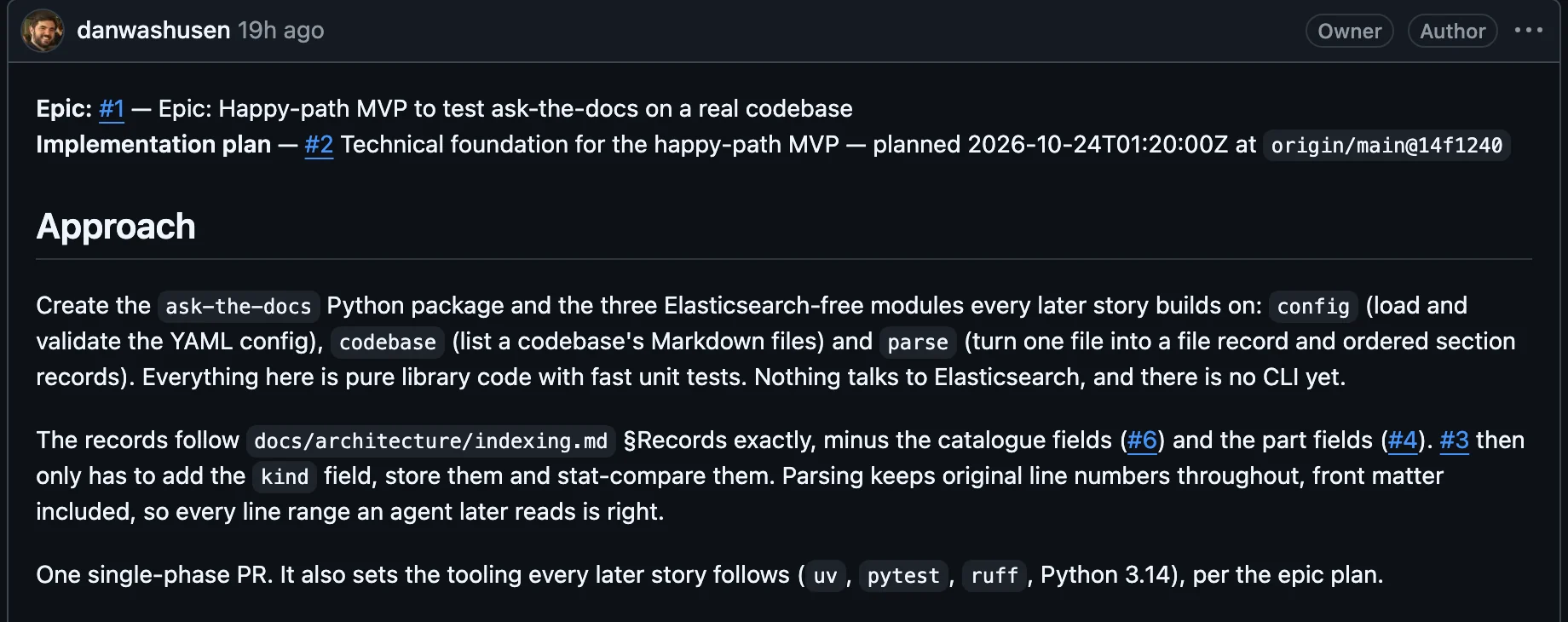
Story #2's plan, with the approved deviation recorded and the date it was agreed. HANDOFFNext: implement the story in a fresh session.
/github-pipeline:resolver #2
FROM HERE
The team takes it the rest of the way.
The resolver builds #2 in its own worktree and opens a PR, looping with review until it's clean. The evaluator checks it against the issue and merges it. Then the next story is planned, built and merged the same way. Point a coordinator at the epic and it runs that loop for you, asking only when a call is yours.